

- Content Hub
- Leadership and Management
- Team Management
- Managing Different Individuals
- A Hidden Force: Unlocking the Potential of Neurodiversity at Work
A Hidden Force: Unlocking the Potential of Neurodiversity at Work
by Our content team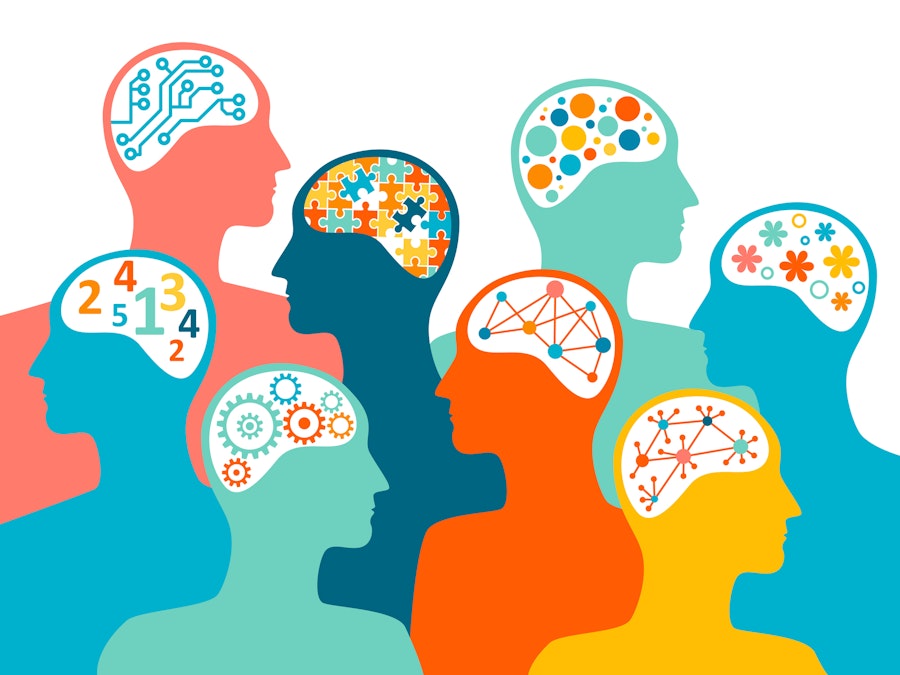
Access the essential membership for Modern Managers
Transcript
Rachel Salaman: Hello, I’m Rachel Salaman. In conversations around diversity in the workplace, neurodiversity, or the differences in how our brains process information, is often overlooked. Yet some researchers say as many as 15 percent of people are neurodivergent, and many of them are being held back or even excluded by current workplace norms.
Today we’ll be looking at what we can do about this and why it matters. My guest is Ed Thompson, the founder and CEO of Uptimize, a neuro-inclusion training company. He’s also the author of a new book titled “A Hidden Force: Unlocking the Potential of Neurodiversity at Work,” and he joins me now from Denver. Hello, Ed.
Ed Thompson: Hi. Thank you for having me.
Rachel Salaman: Thanks so much for joining us. Now you have a compelling personal story about how you started working in this area, don’t you? Could you briefly fill us in on that?
Ed Thompson: Yes, it’s a slightly strange personal story in a way, one that various things happened and I couldn’t foresee what they would lead to. I had a traumatic brain injury from a car accident four days into my career in my early twenties. That gave me some new sensory sensitivity challenges, some brain processing, speed processing challenges that I’d never had before.
At the time I’d never heard of neurodiversity. I was just annoyed that I’d had the accident, albeit elated to have survived. It took me years to go back to full-time work, about five years.
And to skip to then when I did go back to full-time work, I found myself working for the CEO of a tech company in London whose priorities were really very much about people and diversity, and I think people say these days HR priorities, what were HR priorities have become CEO priorities, and I very much saw that firsthand. His concerns were how do we build the 21st century workforce and make sure that we have people who not just look different but also really think differently as well.
So, I got involved, rather to my surprise, in very strategic diversity programs. And seeing the success of them, and how those scaled beyond my own organization at the time to others in the London tech sector, motivated me to think, “What else could be done here?”
And that was where I started to join the dots between that work and my own experience and the experience of some autistic family members, and realized organizations just don’t know anything about brain differences and yet this is incredibly important. So that was the birth of Uptimize, to change that.
Rachel Salaman: So interesting. So, the term “neurodiversity” is relatively new. Could you give us a potted history of this word and maybe a more detailed definition of it?
Ed Thompson: Yes, so I think it’s instructive to think about where it’s come from, actually, so I’m glad you asked me that question. Neurodiversity means what it sounds like. It means, in a way, it means the diversity of human brains. There’s no one normal brain, every brain is different, that’s what it means.
Now that’s always been the case within humanity. That’s just a reality of the human species, and yet we’ve only started appreciating that for about the last 20 or 30 years, and indeed the term was only coined in the 90s, as I’ll get to in a sec.
What happened instead was it was the medical world that started identifying that some people have particular traits that do mark them out, if you like, from a broader norm, albeit people in that broader norm are not all necessarily the same.
But what medicine was doing was saying there are kids, say, who exhibit particular behaviors, who have particular challenges, and giving them medical labels such as “autistic,” for example, in the 20th century. And so these brain differences, these broad differences were medicalized from the outset and actually positioned against a sort of norm, if you like.
And they were all diagnosed and framed based only on negatives. So the autistic diagnosis, as now, wasn’t you may have challenges with some things but you may have great strengths with others. It was just you have challenges with these things and therefore we’re going to give you a badge as having a deficiency.
You see that in some of the names of forms of neurodivergence as they’ve emerged – ADHD, the double negative in that phrase; dyslexia, which literally means “can’t read”; all of these differences were framed negatively in that way.
And so you had societies where some people would get these diagnoses, but most people wouldn’t, and access to diagnoses was fairly limited and patchy, and knowledge and understanding of these differences was pretty low, and you had cultural representations of people with some of these forms of neurodivergence being quite stereotyped – based on some of those negatives, largely.
And what happened in the days of the nascent internet in the late 20th century is neurodivergent people started linking up on chat rooms and so on, on the web, and actually sharing with each other the frustrations that they felt as to how society viewed them.
And positing instead this idea of all brains just being different and their brains being different with some positives, maybe some challenges as well, and really this idea that society needs to completely reframe how it thinks about people with different brains, and not simply from this kind of deficiency model.
So the term neurodiversity actually came from somebody who was observing and writing about that sort of movement in the 1990s, and it became popular and it became the key term of a disability rights movement, if you like, or an offshoot of the disability rights movement which argued and continues to argue for this reframing that neurodiversity be understood as a natural reality of humans and not – I suppose replacing the idea that some humans have brain problems but most don’t, which was the sadly logical conclusion of the medical model.
Rachel Salaman: Yes, so given that everyone is wired differently, how did the idea of a normal or neurotypical brain evolve from which people are seen as diverging?
Ed Thompson: Yes, that’s a very good question as well. I think it’s here we’ve got to sort of go to a couple of different levels. Yes, there’s the level that every brain is different. That’s very important, it’s important we don’t generalize, but that is also a difficult reality to navigate and so we do talk about the idea of neurotypes, if you like, sort of clusters of more similar traits and profiles.
Now that’s not to say that everybody within that type is exactly the same, but it is sort of a helpful shorthand. So, let’s think about this in the workplace: you mentioned norms in the workplace, very important. Previously nobody’s really thought about neurodiversity, in all of these interactions at work that take place between people with different brains.
So what happens is norms emerge, norms in terms of how we communicate, how we hire, how we build an environment or a process. Now, those norms often more or less work for many – which is why they’re norms, so they can work for people with those more sort of typical clusters of traits – but they don’t work for all.
Now it’s become more and more obvious I think with the rise of the neurodiversity movement within this human spectrum, some people do have a strong sense of distinct neuro-identity and shared experience, and I think partly that’s because of having been misunderstood and marginalized by those norms and by that ignorance, and those of course are the so-called neurodivergent identities.
And you mentioned 15 percent and some people would say that could be 20 percent of people overall. And I think “neurotypical” has just been used as a sort of shorthand in practice to refer to people who don’t consider themselves as having one of those, while not being taken to mean that every neurotypical is exactly the same. So, it is a very muddy picture and I think we have to just accept that.
Rachel Salaman: Yes, and are there actual brain differences anyway between neurotypical and neurodivergent people, or is it sometimes nurture rather than nature or just a strong desire to identify, as you’ve perhaps implied?
Ed Thompson: I think it’s pretty well established now and accepted that neurodivergence, or indeed an individual’s brain wiring, is genetic, so nature rather than nurture. Of course, the understanding, the really nuanced understanding of the brain is still in its infancy to some extent given how complicated it is.
There are scientists who have suggested and found, and found and suggested, that there are very specific brain differences within some neurodivergent people. For example, there was a scientist I talk about in my book called Casanova who has found that there can be longer columns in the cerebral cortex in dyslexic people, and he posits that that’s somehow how they get their big picture thinking.
Now, I don’t know enough about neuroscience to know how robust that is, but that’s the sort of work that people are doing, and there’s other examples of that where people have found some, I suppose, evidence of the different wiring in people.
And then I think it’s important, actually, if we really think about that, then to pull that back to the idea of neurodiversity and the idea of personal identity, and I think that’s what a lot of the neurodiversity movement has been about.
It’s been about challenging the idea that your brain is sort of broken, your brain is sort of not working as it should, and reclaiming the idea that no, this is the brain I have, and actually that’s a beautiful thing in a way.
And my brain as it is naturally leads me to be very good at something, maybe better than others, and that’s being completely buried, while of course maybe also giving me some challenges in other contexts which to some extent of course neurotypicals share, it just can be a little bit more accentuated with the neurodivergent profile.
Rachel Salaman: Well, it’s certainly a very complex area and, as you say, quite difficult to generalize but as much as we can generalize, in your book “A Hidden Force,” you talk about boulders in the road for neurodivergent people. What are some of these and how widespread are they?
Ed Thompson: Yes, I use that phrase to talk about the friction points that people in the neurodivergent community have told us about as we’ve done our interviews, our focus group interviews at Uptimize, which has been very important to us as we build training about this topic – to understand what are the experiences of the community, and actually we can really learn from them.
And a lot of the time we have neurodivergent people speaking in our training saying this is something that they found difficult or this is something a manager once did really well, so why doesn’t every manager do that?
There are many of these friction points that have emerged because, as I said, we have both talked about norms. Sadly, most people don’t think about neurodiversity in their workplace interactions even though of course all of these interactions take place between people who have different brains; they don’t think about neurodiversity in process design, in the building of environments, and so on.
Let’s take hiring as an example, which I think the process of getting hired is really full of pitfalls for neurodivergent talent. Just to name a few that people might mention – first of all, right off the bat, a lack of statements from organizations saying that this matters.
An organization might have a diversity page of their website, careers website, saying how important diversity and inclusion is; very rare, and I would say it’s largely organizations we work with at Uptimize that are the outliers, where they really talk about their enthusiasm for different thinking styles. So, there is immediately a sort of “do they want people like me, do they understand people like me?”
I think, sadly, often that’s rooted in or grounded in fact. Confusing job descriptions and application forms, timed application forms, job descriptions that ask for things that they don’t really need. So we’ve got a role that doesn’t really need great communication skills but asks for it anyway just because they think we might as well; job descriptions full of jargon, and so on.
These things can be confusing to literal thinkers. And then you get into how people are filtered. I think that’s another big challenge. You may find particularly older people who are neurodivergent have had more patchy employment experiences due to reasons outside their control.
I have friends who have been fired for the spurious reason of sort of finding something in the organization that wasn’t working and telling everybody it wasn’t working; people struggling to get hired and being over-qualified and so on. So I think that sort of mass filtering can be a challenge here as well. You see somebody that has had a couple of years out of work, and they don’t make it through.
A classic norm, and I hinted at this earlier, is that overreliance on interviews as an assessment device, which are absolutely central and yet often really just a sense, a test, rather, of social competence, and a test of social competence for roles that don’t always necessarily really rely on social competence.
I think that’s a challenge particularly when interviewers are untrained and often unfamiliar with neurodiversity which means that biases can run wild. Often, of course, candidates are given a pretty poor experience through these application processes as well.
I always like to tell this story but when I was going for a job after I left university I had multiple interviews. I’m still waiting to find out 20 years on or so if I got the job! So, these confusing kinds of experience, I can laugh about that, but I know from friends who are neurodivergent that can be really particularly stressful for somebody who just likes to know what’s what and that sense of order and predictability.
Just talking about hiring, none of the things I’ve mentioned are that difficult to change. I’m not saying we get rid of interviews. I’m just saying if we do them slightly differently, we make sure people understand neurodiversity when we do them. These are all fixable things, but if we pile them all up, it’s not that difficult to think, just in the case of hiring that we’ve just explored, that we could unintentionally exclude neurodivergent talent.
You’re listening to Expert Interview from Mind Tools.
Rachel Salaman: Well, a lot of this is about awareness building and this comes through in your book very strongly. What does building awareness look like in, let’s say, a mid-size company operating in one location, and if we’re talking about awareness building throughout the workforce, so that a neurodivergent person would have colleagues who are aware as well as bosses?
Ed Thompson: Yes, absolutely, I think that’s a really important point and we do get people coming to us saying… I mean, in an extreme case they say, “We’ve got one neurodivergent person over in this department and they’ve got a manager, so we need to train the manager.” And we start saying, “Well, what about other managers? What about colleagues?” and so on, and the penny drops after a while.
Yes, awareness is really, it sounds slightly trite I suppose, but I think with something like this which is so profound, so, almost nothing more fundamental to an organization. An organization is about people. What’s the one tool they’re all bringing to work every day? Their brain.
The appreciation of brain differences, I think, is as fundamental as anything, and yet of course we haven’t been taught about it, so we need to change that now. To me it’s about a sort of a pivot, it’s a pivot that if you can get people to go on that journey, then it unlocks a curiosity to apply these principles in all aspects of talent management. That pivot is about: do people know what this means?
We find about 60 percent of people who come and do our courses don’t, which is pretty wild when again 20 percent of people might be neurodivergent. 60 percent of people don’t even know what that means. Do they realize they work in a neurodiverse team and organization? Do they realize they’re bringing their own thinking style to all of these interactions?
For example, if they’re a manager but so is everybody else, and it’s OK that they have their style but less OK if they just think their style is the same as everybody else. Do they have the basic foundation of neuro-inclusive behaviors to bring to work? Do they know how to respond if somebody discloses. Generally, the answer to all of those things is no.
And again, I don’t think people should be blamed for that; they just haven’t been taught. So that’s why awareness is needed, and that’s something obviously we specialize in, and we specialize in trying to allow people to make a pretty small time investment in whatever it is, an e-learning course or a virtual live session, for quite a profound change where they come out of this and they do know what it means.
And they do realize they work in a neurodiverse team and they do have a foundation of behaviors and they do know what to do when somebody discloses and they do know how to make hiring at a basic level more neuro-inclusive, and that’s the foundation of the neuro-inclusive organization you mentioned, you know, mid-sized company.
But what that does, I think, is it prompts people, particularly managers, HR people, people involved in hiring, to think, “Gosh, I hadn’t thought of this before. How do I take this into what I’m doing? How do I apply these principles as a leader? How do I apply these principles in terms of how we access talent?”
And often there’s a lot of curiosity from those folks saying, “This is great, give me more, I want to know how to apply this as an HR person,” and so on. So that’s awareness in a nutshell.
Rachel Salaman: And we’ve talked quite a bit about hiring. What about the day-to-day? What are some specific details a leader might need to think about to make the environment and the working practices more comfortable for neurodivergent people?
Ed Thompson: Yes, with all of this we can think about key elements for anybody’s work experience: culture, process, policy, environment as well. I think you mentioned environment. The key lesson really is that preferences are going to vary here.
I mentioned I have some sensory sensitivity and that’s a very common thing to differing degrees within the autistic community as well, so that sensory experience is going to shape somebody’s comfort in an environment. Just being aware of that at a foundational level I think is important.
But it’s also really, and it was the one word I couldn’t avoid repeating in my book – it’s about being flexible and it’s not about making assumptions. It’s simply about thinking, well, this is the environment we have. That might work for some; it might not work for others.
So, are there ways that we can make that environment more comfortable for somebody? Or can we even have the flexibility where they don’t need to engage in this environment and they can work remotely?
Ultimately culture is the most important here, though I think culture is king is absolutely key and there is a lot leaders can do here. I talked about psychological safety. That’s something that is often lacking. I know it’s a buzzword but it’s really a buzzword for a reason.
Some data in the U.S. suggested that 40 percent of people, of all people at work, don’t feel like their organization welcomes their ideas, which is a bit of a problem, so I think there’s a lot a leader can do there to source, feed back on ways of working, processes and so on, and genuinely welcome them and give them credence.
There’s a lot I think leaders can do as well in terms of wellbeing, modeling vulnerability, modeling work/life balance, modeling values as well. We talk a lot about wellbeing in our training, just having check-ins with individuals, team wellbeing check-ins, asking how everyone’s doing and being open as a leader to saying, “Well, actually, maybe today I’m not doing that great and here’s why.” This kind of thing’s okay; this is just the reality of work.
I could go on. I’ll just talk about process for a second. I think process is very important and, in a way relates to the psychological safety that people have or don’t have, to challenge it. It’s very important to stop and think, do we have to do it this way?
And actually, one of the things we talk about as well in terms of neuro-inclusive leadership is this idea of outcome-oriented management, that actually, a neurodivergent person might have their own way of organizing work and their own route to the answer and that could be a little different from, say, their neurotypical manager.
Now, does the manager say, “No, no, you must do it my way,” or does the manager embrace somebody who’s getting to the goal by a different route?
Rachel Salaman: And the idea of workplace accommodations or adjustments for neurodivergent people could be a bit controversial, especially in countries where there’s no law mandating it. I would think some people might see this as special treatment, like “I want noise-canceling headphones too.”
What are some of the arguments that you’ve heard from making these investments and some of the common objections?
Ed Thompson: Well, I think this is interesting and if, again, the organizational goals are wellbeing, belonging, comfort and so on leading to retention, then if we find something that somebody said they need but others say, “Actually I want that too,” surely that’s a great thing, right?
And especially if we think about headphones or something like that, that’s something that could be a pretty cheap proactive offering to anybody. And what we see is organizations actually – whether it’s earplugs or whatever, it could be anything, stress balls, you know – actually offering as much of this stuff as possible kind of upfront.
Recognizing – and it’s really been a truism of neuro-inclusion programs in organizations – that often what benefits a neurodivergent person benefits everybody. We see that with some sensory management pods that an organization called Nook makes; they’re called Nook Pods. These have been used in organizations as relaxing spaces for neurodivergent employees.
Surprise, surprise, a load of neurotypical employees liked them as well because neurotypicals also have to face the stresses of the workplace. So I think the starting point should be, “How do we make people comfortable?”
And if these are simple adaptations that can be offered to everybody, then we can actually build that into what we call our universal design, so actually that proactive design of the workplace experience, and open them up to everybody. And we see organizations doing that.
As far as this sort of envy, that somebody has got something and others haven’t, I haven’t seen that a ton. I think if there’s good understanding of neurodiversity and of some of these differences, then I think you build increasing appreciation that some people might need particular support.
And I think if you frame neurodiversity and neuro-inclusion as “How do I support all of my colleagues?” then there may be things there that you find, whatever your brain wiring, that’s going to benefit you; that people show more curiosity, for example in terms of how you like to communicate.
But you might also see a colleague – and I know somebody in London, for example, who is a banker who’s allowed to work slightly different times in the office so as to avoid the commuter rush because of his sensory sensitivities. I think the more we all learn about this, the more that kind of thing can make sense.
Rachel Salaman: Are there any pitfalls to avoid while you are trying to be more inclusive in the workplace?
Ed Thompson: Well, one that we see at an organizational level, so sometimes people will sometimes come to us and they are motivated to do something about neurodiversity, which is great, is the idea of – I sort of call it putting the cart before the horse when it comes to disclosure.
So I think what that means is they come to think about diversity in terms of numbers. It’s almost like a pie chart – well, we’ve got this many veterans, we’ve got this many people who consider themselves within an ethnic minority, we’ve got this many women and so on – and I think they want to think about neurodiversity in the same way.
So what they ask is, “How do we get everyone to put their hands up so we know who’s who? And once we know who’s who, we know what to give somebody who says they are dyslexic and so on,” which hopefully some of the stuff we’ve talked about today has revealed how problematic that is.
Again, it’s an extremely muddy picture for all the reasons we’ve described, so it’s a very, very difficult ambition, I think. It’s a sort of happy outcome that more people may well disclose as you become more and more neuro-inclusive, but it’s a difficult thing to do a perfect wallchart and I don’t think that should be the ambition.
Then, of course, the challenge is that what somebody actually needs might vary hugely as well, and you mentioned that right at the top. So, we came across an organization, that I’m happy to say before we worked with them, got three dyslexic employees in a room with some HR folks and said, “Right, we want to be more inclusive of dyslexic people. What do you need, as it were; what do you all need?” And of course, they all said different things!
I think that’s very much the wrong way to look at it. You have to really invest in the awareness building and in this idea of really embracing the neurodiverse team, and then good things happen.
Rachel Salaman: In your book you include a chapter on neuro-inclusion and the future of work. In your view, what will make the biggest positive difference in this area in the coming years?
Ed Thompson: Well, I think we have to continue to build awareness in organizations, and again everything starts from that at a level internal to those organizations. I think then what’s starting to happen is you get data showing the impact on organizations and also stories showing the impact on specific people within those organizations.
And I think where we get to a tipping point, and I actually think we’re getting reasonably close to this, is when organizations see enough of that evidence, enough of their competitors really going down this journey and seeing the benefits. I think you get to a point where the laggards realize that this is a must-have or they get left behind.
Now we’re already seeing that, we’re already seeing people within quite competitive talent industries saying “I could never go and work for one of these companies that hasn’t done anything about this. Why on earth would I?”
I’ve worked in organizations where nobody cares about this. I’ve worked in organizations where it’s not like everyone’s an expert but at least there’s a basic desire to say “Right, what is this and how can we be more supportive of it?” And that is absolutely night and day.
And so I think again it’s going to be a risky thing from a talent access point of view, from a retention point of view, from an innovation point of view, for organizations over time to ignore this, and I think they’re going to start to realize that more and more.
Rachel Salaman: Ed Thompson, thanks very much for joining us today.
Ed Thompson: Thank you.
Rachel Salaman: The name of Ed’s book again is “A Hidden Force: Unlocking the Potential of Neurodiversity at Work.” You can find out more about him and his work at www.uptimize.com – that’s uptimize.com. Thanks for listening to this Expert Interview. Goodbye.


