Access the essential membership for Modern Managers
When a team member’s performance, conduct or attendance falls short of expectation, it has to be addressed. However, before you speak to the employee in question, you must prepare yourself by gathering evidence of the problem. Addressing poor performance is never easy, but having evidence to hand to help you to explain the problems will make the process far easier and will allow you to counter any opposition from the employee.
When addressing problems with performance, it is important not to prejudge the situation. Presenting evidence as factually based examples will help you to avoid placing your own interpretation on the issue, which in turn will help you to approach the meeting objectively, dispassionately and professionally.
Types of Evidence
Evidence can take many forms, but not all forms of evidence have equal value.
- Documentary evidence consists of paperwork or electronic recordings such as video or audio, for example, a timesheet or CCTV footage.
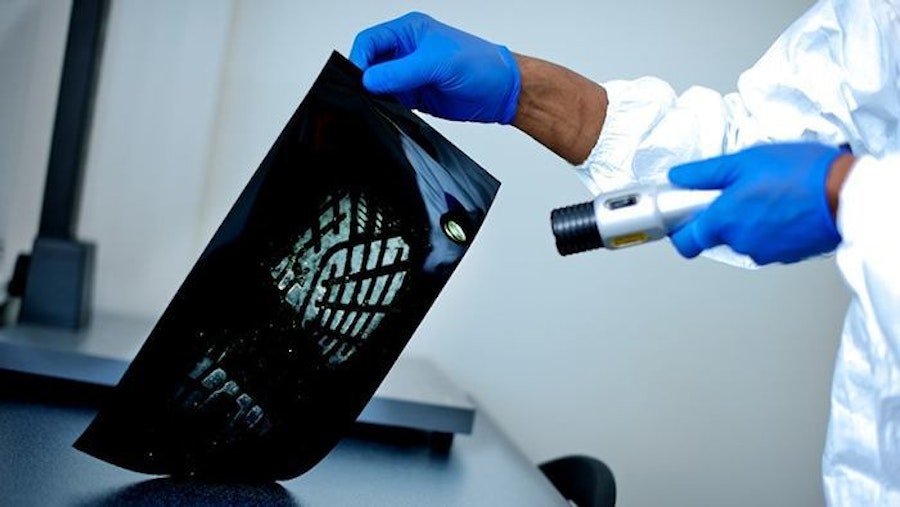
- Physical evidence consists of actual objects or things – for example, if the employee had incorrectly assembled a set of components, this might be shown as physical evidence.
- Testimony takes the form of statements from witnesses who have observed what the employee has done or failed to do.
- Hearsay evidence is information that has been reported to you by a third party.
If possible, try to find documentary or physical evidence, as this is much harder to dispute. Testimony is personal, it is more likely to be subjective or open to interpretation and therefore can be more easily challenged. Use of hearsay evidence should be avoided. If a third party’s evidence cannot be presented as testimony by a witness, you must observe the employee whose behavior is causing concern and gather additional documentary, physical or testimonial evidence.
Use of Evidence
1. Performance Problems
Performance problems are normally manifested by errors, and can usually be proven by producing documentary or physical evidence. Before meeting the employee, gather copies of:
- paperwork or records illustrating what the employee did wrongly or failed to do
- productivity or accuracy targets or standards that the employee is expected to achieve
- any relevant performance agreements reached previously with the employee
- records relating to the impact of the error, for example, customer complaints or evidence of additional costs incurred as a result of the error
- details of dates, times, places and other people involved
2. Evidence of Misconduct
Evidence relating to misconduct such as bullying or theft can be more difficult to collect, since the spectrum of behaviors that could constitute misconduct is so wide. Furthermore, people often fall into the trap of disregarding minor misdemeanors in the hope that they will not be repeated. Often, however, they do recur, frequently with greater intensity than before since they were left unchallenged in the first place. It is far easier and more effective to address problem behavior sooner rather than later. The evidence you gather will clearly depend on the nature of the misconduct, but might take the form of:
- documentary evidence of errors (at this stage, it may not be apparent whether an error is the result of a performance or a conduct problem) or falsified records, for example timesheets, expense forms or target achievement records
- testimony, or witnesses’ observations, but you must remain cautious that such observations are personal and therefore may be subjective, so you should back them up wherever possible with documentary evidence as detailed above
3. Attendance Records
Attendance records are normally easily collected; the challenge in dealing with poor attendance lies in interpreting the records. Where an employee displays a pattern of unauthorized absence (for example, sick days that always precede or follow other scheduled time off such as weekends or holidays) you should be alerted to this as a possible problem. Keep a diary of employees’ absence periods; including sickness and holidays. Attendance problems may also take the form of poor timekeeping. As with absence problems, it is good practice to maintain a diary; then, when discussing the problem with the employee, you will be able to be precise about dates and times.
The Poor Performance Meeting
Depending on the severity of the problem, you may choose to hold an informal meeting, or a formal meeting. The quality of evidence that you collect should be just as strong for informal meetings as for formal ones. However, under statutory requirements, please note that written copies of any evidence should be given to the employee before any formal meeting.
Conclusion
Collecting evidence is a vital part of addressing performance, conduct or attendance problems. Without evidence, any attempt to tackle problem behavior will be based on allegations and opinion and could, therefore, be too easily disputed by the employee in question. While the nature, amount and quality of the evidence needed will depend on the problem and its extent, the data that you collect will help you to illustrate the problem to the employee and will provide you with a platform from which to plan and execute an appropriate performance improvement program.