


Key Takeaways:
- Trust among employees and leaders fosters seamless collaboration, calculated risk taking, and mutual support, contributing to a positive and productive workplace.
- Trust involves confidence in others' reliability, honesty and competence, creating an environment where people feel safe to focus on shared goals.
- Studies show that high-trust organizations outperform low-trust ones in terms of engagement, productivity, staff retention, and the bottom line.
- High turnover, micromanagement, poor communication, and reluctance to take risks indicate low organizational trust.
- Leaders can build trust by upholding the psychological contract, communicating transparently, and promoting psychological safety.
In this article we're looking at trust – what it is, why it's important, and how you can develop it.
What Do We Mean by Trust?
In the workplace, trust is the confidence that employees have in each other and in leadership to be reliable, honest, competent, and respectful in their interactions and responsibilities. Trust creates an environment where people feel safe, valued, and empowered to collaborate and take risks and to admit to their vulnerability.
Organizations need this type of trust. It fosters open communication, reduces the fear of judgment or retribution, and allows people to focus on shared goals without excessive oversight or stress. In a workplace where trust is high, team members can depend on one another, voice ideas freely, and contribute to a positive and productive culture.
The Importance of Trust in the Workplace
Access the essential membership for Modern Managers
Just think back to the last role you had where you didn't trust your boss. Chances are that you weren't as productive as you could have been. Your work quality might have suffered. What's worse, perhaps you and your team missed important opportunities or deadlines, because you weren't willing to "stick your neck out."
According to Paul J. Zak, founding director of the Center for Neuroeconomics Studies, there’s a neuroscientific basis for trust. If people are shown trust by others, their brains produce higher levels of the chemical oxytocin. And raised oxytocin levels seem to make people more trustworthy in turn. So the more trust you demonstrate, the more likely others are to trust you. [1]
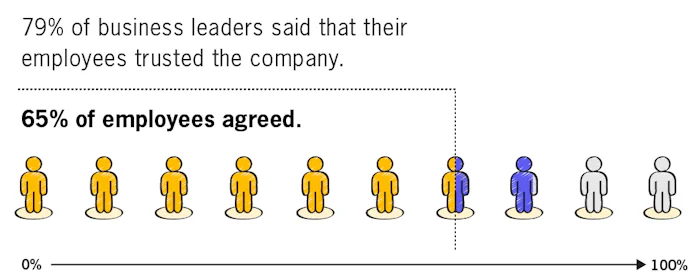
Organizations that lack trust quickly fall behind those where people trust one another and trust their leaders – and these organizations don’t always see the problem. Research by PricewaterhouseCoopers (PwC) showed that 79 percent of business executives said that their employees trusted the company, while only 65 percent of employees agreed.
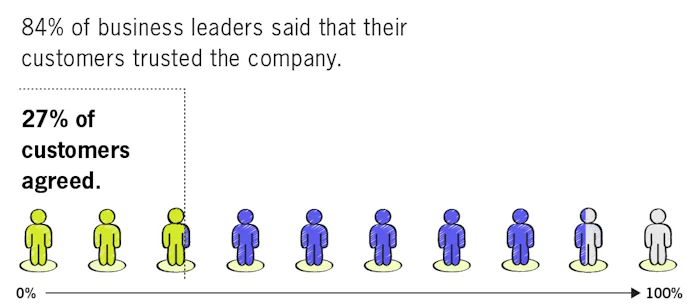
The gap was wider for consumers – 84 percent of leaders thought that customers highly trusted the company, yet less than one third of customers said the same. [2]
That same research also found that the ability to build and maintain trust improved the bottom line. It’s not hard to see why. Survey-based research by Deloitte has shown that a good level of trust directly impacts engagement, productivity and retention. [3] Academic research bears this out. [4, 5] And the higher the level of trust, the more people are willing to take career risks for their leader or organization.
Access the essential membership for Modern Managers
So it’s hardly surprising that the Mindtools Building Better Managers report identifies the ability to build trust as one of 12 key capabilities for managers. [6] Put simply, trust is good for business!
Symptoms of the Absence of Trust
On the flipside, organizations that don’t have a culture of trust are more likely to be dysfunctional, with poor communication and uncoordinated effort. Symptoms of a low- trust organization include:
Without trust, employees feel undervalued and seek opportunities elsewhere.
Leaders don’t trust employees’ abilities and independence, which demotivates employees and stifles creativity.
A lack of openness means that managers and leaders guard information to retain control.
Without trust, people hesitate to depend on others or share credit, leading to fragmented efforts.
Access the essential membership for Modern Managers
A lack of psychological safety leads to employees fearing the repercussions of failure.
When trust is low, organizations compensate by implementing rigid structures to enforce control.
How to Measure Trust
One of the most widely used tools for measuring employees’ trust in leaders is McAllister's Affective and Cognitive Trust scale. It's a two-factor model that assesses trust as a combination of two kinds of trust: cognition-based and affect-based.
Although the scale is 30 years old, more-recent research has proposed adaptations to bring it into line with the needs of hybrid and remote teams. [7]
Cognition-Based Trust
This is an employee's rational evaluation of a leader's trustworthiness, based on their thoughts about the leader's reliability, competence and dedication.
Access the essential membership for Modern Managers
Markers of cognition-based trust in a team include:
- Doing extra things for colleagues that go unrewarded – but make cooperation more productive.
- Sharing new information when it’s useful.
- Willingly helping someone, even if it costs the helper time and resources.
- Taking someone's needs and feelings into account when making decisions that affect them.
- Trying not to make things more difficult for someone through careless actions.
Affect-Based Trust
This is an employee's emotional connection with a leader, based on mutual care and concern. Here are some signs of affect-based trust:
- Team members care about the person, not just the work they do, and reciprocate that care.
- They’re willing to demonstrate vulnerability around each other, admit to errors, and share personal information – within reason.
- Team members choose their behaviors toward each other, rather than just acting "by the book.”
- They seek to meet each other's legitimate needs.
Creating Organizational Trust
Building trust within an organization requires deliberate actions from senior leaders to foster transparency, psychological safety and consistency. The psychological contract – the unspoken agreement of mutual respect, trust, and fair treatment – is fundamental to creating a high-trust culture. Leaders should honor this contract by supporting employees’ needs, recognizing contributions, and delivering on commitments. When employees feel respected and valued, they’re more likely to reciprocate with loyalty and engagement.
Access the essential membership for Modern Managers
Transparent communication means leaders openly share the organization’s goals, strategies and changes, allowing employees to understand the "why" behind decisions. Regular, clear communication – especially in times of change or uncertainty – helps employees to feel informed and respected. Leaders should also show authenticity by acknowledging mistakes and uncertainties.
Senior leaders can promote psychological safety by encouraging employees to voice concerns, ask questions, and share new ideas without fear of retribution. Good leaders demonstrate that they value diverse perspectives by visibly rewarding openness and collaboration.
Over time, consistent actions that align with stated values will solidify a culture of trust, fostering an environment where employees feel secure, respected, and committed to organizational success.
Creating Trust in Teams
Organizations need to ensure that their cultures of trust work at all levels. To build trust in teams, managers need to:
- Be good role models. Work and live by the values you want to see in your team.
- Be honest. People will trust you if they can count on you to tell the truth, even when this is hard.
- Be team players. Speak up for your team when required – for example, if people are being criticized unfairly, or are being asked to deliver to an unreasonably tight deadline. And make sure that your team gets credit for their accomplishments.
- Be transparent. People will also trust you more if they understand why certain decisions are being made. Communicate as openly as you can about decisions, processes and changes with your team.
- Avoid micromanagement. If you're constantly checking on what your people are doing, you’re not trusting them to do their jobs.
Building Trust With Clients and Suppliers
Access the essential membership for Modern Managers
According to PwC, 90 percent of business executives think that customers highly trust their companies. In fact, only 30 percent of consumers actually do. And that gap of 60 percentage points has grown in recent years.
So what can organizations do to close the gap?
- Identify their expectations and needs. Do your homework on your client or supplier, and work out what their requirements and non-negotiables are. Then set about meeting or exceeding these expectations.
- Explain details and motivations. Take time to explain your words, actions and motivations to your client or supplier. The more they know about where you're coming from, the more they're going to feel comfortable trusting you.
- Keep your word. Always keep your word to clients and suppliers, even for small matters. They'll notice, and they'll quickly learn to trust you.
Keep in mind that many of the tips for building trust in organizations and teams can also be used for building trust with clients and suppliers.
Frequently Asked Questions
Workplace trust is the confidence employees have in each other and in leadership to be reliable, honest and competent. It encourages open communication, collaboration and risk taking.
Access the essential membership for Modern Managers
A lack of trust can lead to high turnover, poor communication, micromanagement, and reluctance to take risks. Low-trust organizations also tend to fall behind competitors who foster strong trust.
Common signs include high employee turnover, excessive bureaucracy, micromanagement, poor teamwork, and an unwillingness to share information.
Leaders can build trust by honoring the psychological contract, practicing transparent communication, showing empathy, and promoting psychological safety.
Let’s Act
Start building a culture of trust with transparent communication. Commit to sharing at least one piece of important information with your team every week. This could be about organizational goals, upcoming changes, and even challenges that the company may be facing. Schedule updates, and create consistent opportunities for transparent communication.
By clearly explaining the “why” behind decisions, and acknowledging any uncertainties, you demonstrate honesty and openness. This turns employees into respected and informed stakeholders, not just passive participants.
Access the essential membership for Modern Managers
Share this post
Discover more content

David Rock’s SCARF Model
Discover how David Rock’s SCARF Model uses neuroscience to improve feedback, reduce threat responses, and boost motivation, collaboration, and leadership in the modern workplace.

Dealing With Difficult People
Do you find some people you work with annoying or just difficult? In this podcast, we bring together tips and techniques for dealing with difficult people.

Reconnecting After COVID
Discover ways to reconnect with your co-workers, customers and clients after COVID, with a range of tips and advice in our Expert Voices podcast.